
In the modern world, breathing is frequently viewed as an involuntary biological function, an automatic process handled entirely by the brain stem while we focus on the demands of daily life. However, in the tradition of yoga, the breath is understood to be the primary bridge between the physical body and the human mind. The ancient yogis recognized that while you cannot easily control your digestion, your heart rate, or your cellular metabolism directly, you can consciously alter your breathing. By changing the rhythm and depth of the breath, you can systematically influence your entire nervous system.
This conscious cultivation and control of the breath is known as pranayama. It forms the fourth limb of the classical eight-limbed path of yoga outlined by the sage Patanjali. Far from being a mere prelude to meditation or a recovery tool after physical postures, pranayama is a potent, standalone technology designed to manipulate vital energy, stabilize erratic thoughts, and optimize physiological health.
The Anatomy and Etymology of Pranayama
To understand the scope of this practice, it helps to break down the underlying Sanskrit terminology. The word pranayama is composed of two distinct roots: prana and ayama.
Prana translates roughly to vital life force, cosmic energy, or the fundamental animation behind all living matter. It is equivalent to the concept of chi in traditional Chinese medicine. In the human body, prana is the invisible current that drives physical movement, cognitive thought, and sensory perception. Ayama means to extend, stretch, lengthen, or draw out. Therefore, pranayama is not simply breath retention or hyperventilation; it is the deliberate extension and regulation of the vital life force via the respiratory system.
Physiologically, pranayama operates primarily by interacting with the autonomic nervous system, which is divided into the sympathetic nervous system and the parasympathetic nervous system.
-
Sympathetic Nervous System: This is the fight-or-flight mechanism. It accelerates heart rate, constricts blood vessels, elevates blood pressure, and shifts energy toward immediate survival during moments of stress.
-
Parasympathetic Nervous System: This is the rest-and-digest mechanism. It slows the heart rate, lowers blood pressure, facilitates cellular repair, and encourages optimal digestion and immune function.
Most individuals living in high-stress environments suffer from chronic, low-grade sympathetic dominance, driven by rapid, shallow chest breathing. Pranayama works by utilizing targeted breathing patterns to consciously stimulate the vagus nerve. The vagus nerve acts as the primary highway of the parasympathetic system, signaling the brain to reduce cortisol production, decrease systemic inflammation, and establish physical tranquility.
The Four Pillars of the Breath Cycle
In standard respiration, we generally only notice the inhalation and the exhalation. Classical pranayama, however, identifies four distinct phases within a single complete breath cycle. Mastering these phases allows a practitioner to gain total control over their energetic states.
-
Puraka (Inhalation): The act of drawing breath into the lungs. In pranayama, this is a conscious, smooth, and expansive movement where the diaphragm drops down, allowing the lower, middle, and upper lobes of the lungs to fill completely.
-
Abhyantara Kumbhaka (Internal Retention): Holding the breath when the lungs are full. This phase is used to increase intra-thoracic pressure, maximize oxygen diffusion in the alveoli, and cultivate a sense of internal stillness and strength.
-
Rechaka (Exhalation): The slow, controlled release of the breath. An effective exhalation is steady, complete, and unhurried, allowing the body to purge carbon dioxide while simultaneously calming the mind.
-
Bahya Kumbhaka (External Retention): Holding the breath when the lungs are completely empty. This is considered the most advanced phase, requiring deep abdominal engagement. It trains the brain to tolerate higher carbon dioxide thresholds, building exceptional nervous system resilience.
Foundational Pranayama Techniques
Different pranayama practices yield vastly different physiological and psychological results. Depending on the ratio, speed, and pathway of the breath, a practice can be cooling, heating, balancing, or deeply tranquilizing.
Nadi Shodhana (Alternate Nostril Breathing)
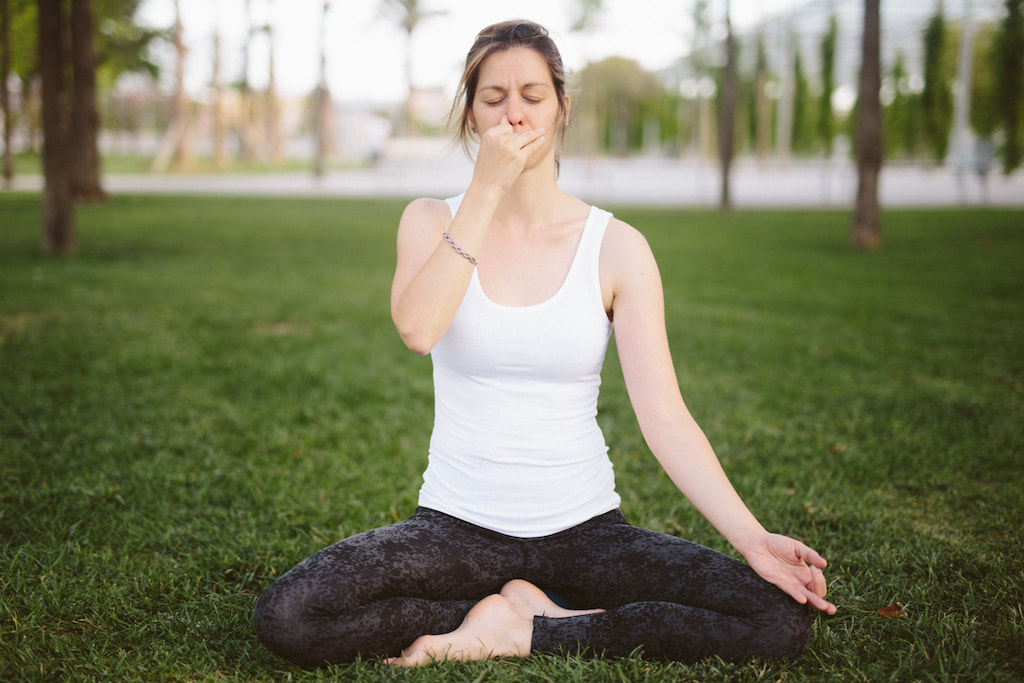
Nadi Shodhana is the quintessential balancing pranayama. Nadi translates to energetic channel, and shodhana means purification. The practice involves using a specific hand mudra to systematically block one nostril at a time, inhaling through the left side, exhaling through the right, and then reversing the order.
From an anatomical perspective, alternate nostril breathing helps balance the left and right hemispheres of the brain. The right nostril is linked to the pingala nadi, which stimulates the sympathetic nervous system and induces logical, analytical, and heating energy. The left nostril connects to the ida nadi, which triggers the parasympathetic system, fostering creative, intuitive, and cooling energy. Practicing Nadi Shodhana harmonizes these opposing forces, making it perfect for relieving anxiety before sleep or clearing mental fog before work.
Ujjayi (The Ocean Breath)
Commonly utilized during dynamic Vinyasa yoga classes, Ujjayi involves a slight partial constriction of the glottis at the back of the throat. This constriction creates a soft, resonant sound resembling ocean waves or a gentle whisper.
The resistance created by narrowing the throat forces the respiratory muscles to work harder, generating internal metabolic heat that warms up the joints and muscles. Furthermore, the auditory feedback of the ocean sound serves as an anchor for the wandering mind, drawing attention entirely into the present moment while smoothly regulating the pace of physical movement.
Kapalabhati (Skull Shining Breath)
Kapalabhati is technically a shatkarma, a yogic purification technique, but it is widely practiced as a powerful pranayama. It features short, explosive, forced exhalations driven by sharp inward contractions of the lower abdomen, followed by passive, automatic inhalations.
This practice is highly stimulating and invigorating. It increases heart rate, clears stagnant air and excess mucus from the respiratory tracts, and boosts mental alertness by temporarily altering blood-gas ratios. Due to its heating and awakening qualities, Kapalabhati is traditionally practiced in the morning to dispel lethargy.
Bhramari (The Humming Bee Breath)
Bhramari is a deeply soothing technique where the practitioner closes their eyes, covers their ears with their hands, and produces a steady, low-pitched humming sound during a prolonged exhalation. The physical vibration generated by the humming resonates through the bones of the skull and facial sinuses.
Scientific studies indicate that this specific auditory vibration stimulates the production of nitric oxide in the nasal passages while simultaneously inducing alpha brainwave activity. Bhramari is exceptionally efficient at immediately lowering acute high blood pressure, relieving tension headaches, and soothing an overstimulated mind.
Guidelines for a Safe and Productive Practice
Because pranayama directly influences the cardiovascular and nervous systems, it must be approached with mindfulness and respect. Forcing the breath or attempting advanced retentions without proper preparation can result in dizziness, heightened anxiety, or erratic energy levels.
When beginning a pranayama practice, always sit with a straight, unsupported spine to allow the diaphragm to move without restriction. Keep your shoulders, neck, and jaw completely relaxed, as physical tension acts as a barrier to smooth respiration. Never push past your comfortable limit; if you feel short of breath or gasping at the end of a cycle, the ratio you are practicing is too demanding. Start with short sessions of five minutes per day, focusing on simple techniques like even-ratio box breathing before introducing complex retentions or rapid expansions.
Frequently Asked Questions
Is it normal to feel dizzy or lightheaded when first practicing pranayama?
Slight lightheadedness can occur in beginners, particularly during practices involving rapid breathing like Kapalabhati or deep retentions. This is usually caused by a rapid shift in carbon dioxide levels in the blood, which temporarily alters cerebral blood flow. If you experience dizziness, immediately stop the technique, open your eyes, and return to your natural, unpaced breathing pattern until the sensation subsides completely.
Can pranayama be practiced on a full stomach?
Pranayama should always be practiced on an empty or near-empty stomach. A minimum of two to three hours should pass after a heavy meal before engaging in breathwork. Because many techniques involve deep diaphragmatic movement and muscular contractions of the abdomen, practicing with a full stomach can cause indigestion, nausea, cramps, and restricted breathing capacity.
How does pranayama differ from modern Western breathwork methods?
Modern breathwork methods, such as hyperventilation-based techniques, often focus on inducing a controlled stress response to trigger therapeutic emotional releases or physiological adaptation. Pranayama is an ancient, broader system that emphasizes precise breath retention ratios, energetic channel purification, and the integration of breath with mental stillness to prepare the mind specifically for deep meditation.
Can pregnant women safely practice all forms of pranayama?
Pregnant women must avoid any pranayama techniques that involve forced abdominal contractions, such as Kapalabhati, as well as any extended internal or external breath retentions. Simple, gentle practices like Nadi Shodhana or soft Ujjayi breathing without retentions are generally safe and can help manage stress, but a doctor or prenatal specialist should always be consulted first.
Why is the breath traditionally held at the end of an inhalation or exhalation?
Breath retention, known as kumbhaka, is used to change the body’s internal pressure systems and alter chemical concentrations in the blood. Retaining the breath helps condition the nervous system to remain calm under minor chemical stress, expands lung capacity, and helps quiet the internal dialogue of the mind by suspending the physical movement of respiration.
Should I practice pranayama before or after my physical yoga postures?
Traditionally, pranayama is practiced after physical postures and before meditation. The physical yoga poses serve to open up the hips and strengthen the spine so that you can sit comfortably for long periods without pain. The active movement also releases excess physical restlessness, leaving the body primed for the quiet, subtle work of breath regulation.

Comments are closed.